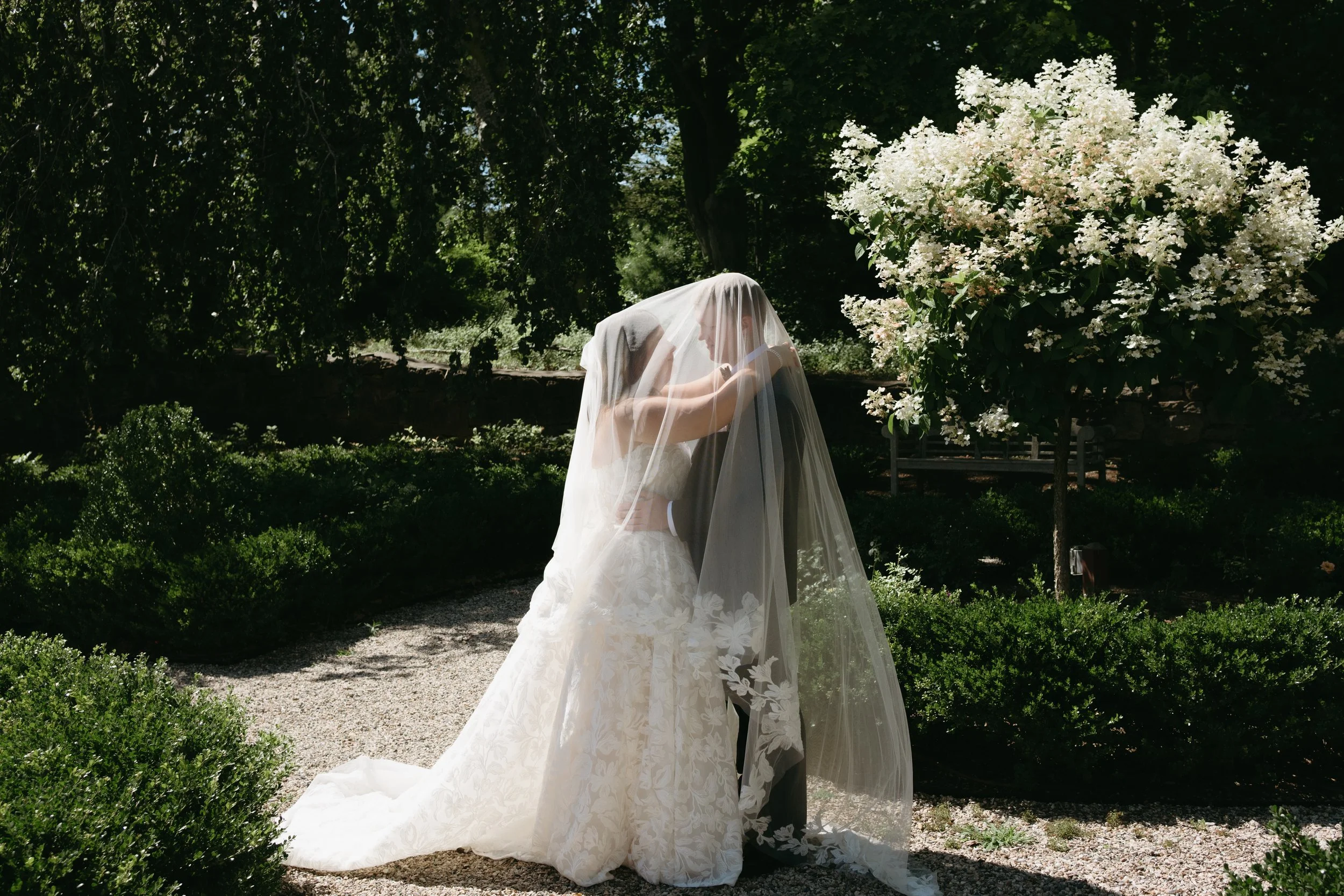
How To Create A Wedding Day Timeline That Actually Works
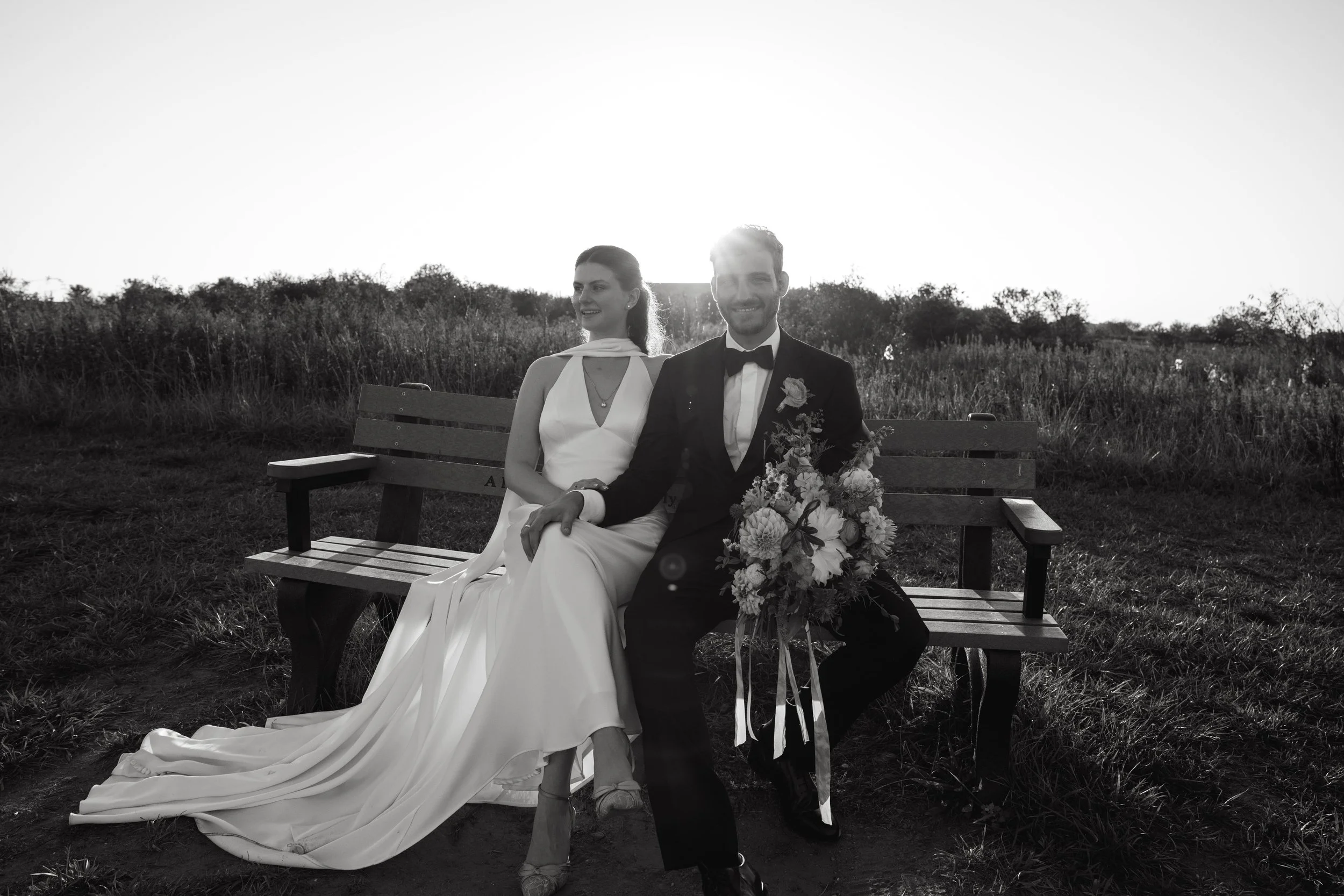
M + F on their wedding day at the Audubon Society, Stratford, CT
A well-planned wedding day timeline is one of the most powerful tools you have for creating a calm, enjoyable, and smoothly run celebration. When the timeline works, everything else tends to fall into place — from photography coverage and travel logistics to guest experience and your own peace of mind. When it doesn’t, the day can feel rushed, disorganised, or unnecessarily stressful.
In this article, you’ll learn how to create a wedding day timeline that is realistic, flexible, and genuinely supportive of how weddings unfold in real life. We’ll cover where to start, how to prioritise key moments, common mistakes to avoid, and how to build in breathing room — whether you’re planning a countryside wedding in Scotland, an elegant estate celebration in New England, or an intimate gathering in Upstate New York.
By the end, you’ll have a clear framework for building a timeline that works for you, your guests, and your suppliers — not against you.
Why a Wedding Day Timeline Matters More Than You Think
A wedding day timeline is not just a schedule; it’s a decision-making tool. It shapes how the day feels, how relaxed you are, and how much space you have to actually enjoy what you’ve planned.
A strong timeline helps to:
Reduce stress and last-minute decisions
Ensure suppliers can do their best work
Allow moments to unfold naturally rather than feeling rushed
Give guests a clear, enjoyable flow to the day
Without a realistic timeline, delays tend to stack up. Hair and make-up runs late, travel times are underestimated, and suddenly the ceremony starts behind schedule — affecting everything that follows. This makes you as a couple feel more stressed, and it can prevent your guests from feeling their full, happy emotions.
When Should You Start Planning Your Wedding Day Timeline?
One of the most common questions couples ask is when they should begin creating their timeline. The short answer: earlier than you think, but later than most people do.
Start with a rough framework early
As soon as you’ve confirmed your ceremony time and venue(s), you can sketch out a basic structure. This doesn’t need to be detailed yet, but it helps you understand the flow of the day.
At this stage, focus on:
Ceremony start time
Reception start time
Travel between locations
Sunset time (particularly important for photography)
Finalise the timeline closer to the date
A fully detailed wedding day timeline is best finalised 6–8 weeks before the wedding. By then, you’ll have confirmed suppliers, final guest numbers, and a clearer sense of how the day will run.
This is also when your photographer and planner (if you’re working with one) can help refine timings based on experience.
How Long Should a Wedding Day Actually Be?
There’s no universal answer, but most weddings fall into a few common patterns.
J + J on their wedding day at Highfield Hall, Falmouth, Cape Cod, MA
Typical wedding day length
For most celebrations, especially in places like New England or Upstate New York where venues often host the entire day on site, the wedding day spans:
10–12 hours of coverage from preparations to dancing
Around 6–7 hours from ceremony start to formal end
Trying to fit too much into a shorter window often leads to stress, while stretching the day too long can leave guests feeling tired.
Build a timeline that reflects your priorities
If photography, meaningful conversations, or a relaxed atmosphere are important to you, your timeline should reflect that. That may mean fewer formal events and more open space. This is especially true for those looking to have a documentary approach to their photography: the more time things have to naturally unfold, the more naturally they can be documented.
How to Structure a Wedding Day Timeline Step by Step
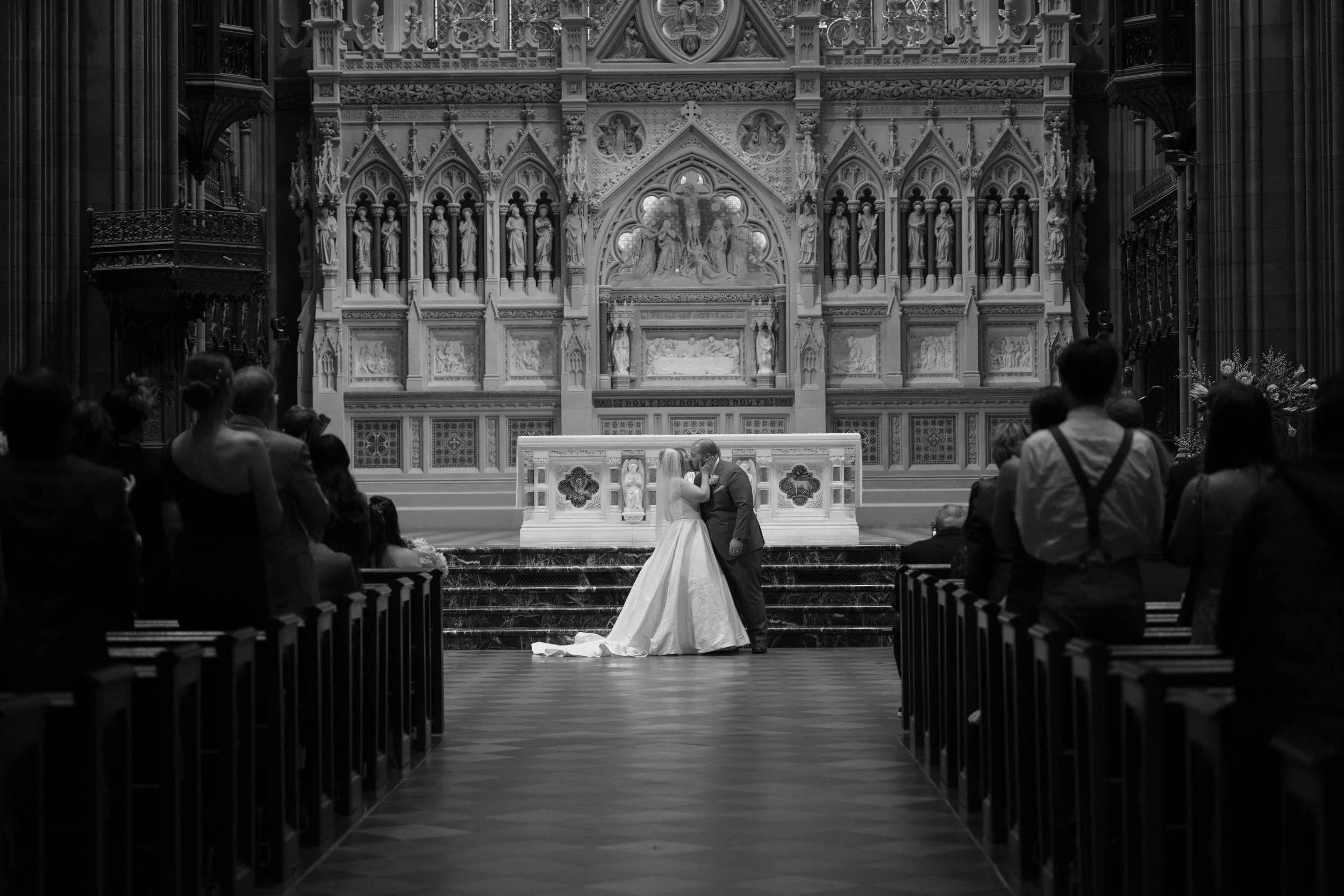
K + R pronounced officially married at Trinity Church, New York City
Creating a timeline works best when you build it backwards and forwards at the same time — starting with fixed points, then filling in the details.
Step 1: Lock in non-negotiable times
These are the moments that cannot move easily:
Ceremony start time
Venue access times
Legal requirements (particularly relevant for destination weddings)
Noise curfews or reception end times
Everything else should be built around these anchors.
Step 2: Add preparation time realistically
Preparation almost always takes longer than expected. Hair and make-up delays are one of the most common reasons timelines fall behind. Plan for:
Hair and make-up finishing at least 30–45 minutes before getting dressed
Getting dressed taking longer than you think (especially with detailed outfits): trust me on this, getting into a wedding dress does not take 5 minutes, I usually schedule about 30 just in case!
Buffer time for unexpected moments
Step 3: Factor in travel properly
Travel is often underestimated, particularly in rural areas like Upstate New York or crowded summer spots like Newport, RI. Always allow extra time for:
Traffic or road closures
Parking and walking to locations
Herding groups of people between places
Generally, I recommend doubling your travel time at the very least to ensure you can safely get from A to B without feeling rushed or stressed about traffic.
How Much Time Should You Allow for Photography?
Photography works best when it’s woven naturally into the day rather than treated as a separate task.
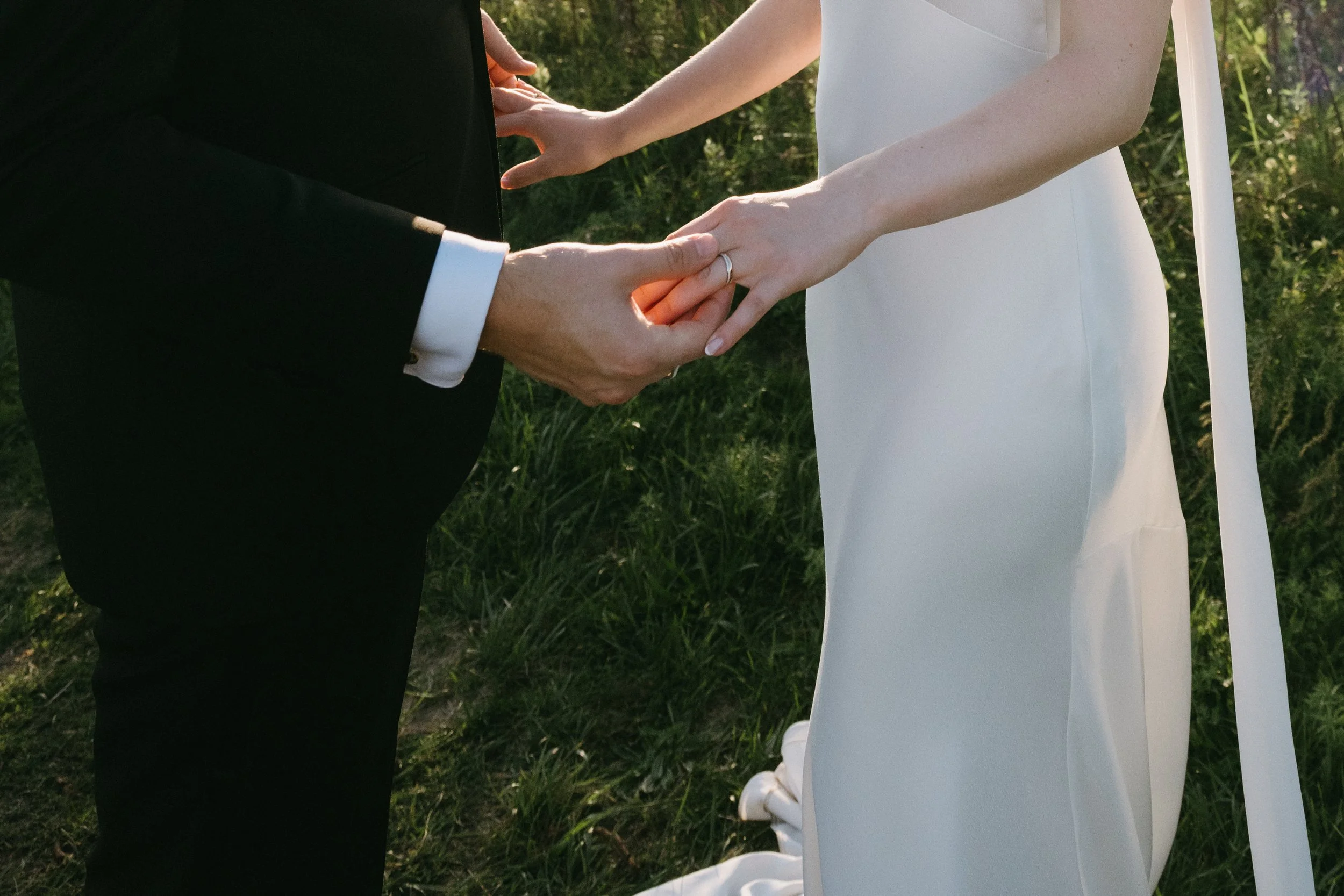
Getting ready photographs
Getting ready photos are where most couples are surprised when it comes to the timeline: I hear this a lot from clients that no one really wants to have tons of photos of them with half a face of makeup, or half their suit on—and that makes sense! But remember that ‘getting ready photos’ are really to capture the fun, exciting, and beautifully emotional moments with your friends and family before the ceremony itself. It’s when a lot of happy tears flow, and so much authentic emotion is visible. To really be able to capture all of this, allow at least:
90 minutes for each person getting ready
2–3 hours if both partners are getting ready at separate locations
This gives space for detail photographs, candid moments, and a relaxed pace.
Portraits and group photographs
A realistic breakdown looks like this:
Family group photographs: 30–45 minutes
Wedding party photographs: 25–35 minutes
Couple portraits: 30–45 minutes (with at least 20 minutes of buffer time on each end)
If you’re planning portraits at multiple locations, add double the travel time you need plus buffers.
Planning around natural light
In regions with dramatic seasonal light changes — such as Scotland or New England — sunset timing can shape the entire timeline. Golden hour portraits often require stepping away briefly during the reception, which should be planned intentionally rather than spontaneously.
Should You Do a First Look or Wait Until the Ceremony?
This decision has a direct impact on your timeline.
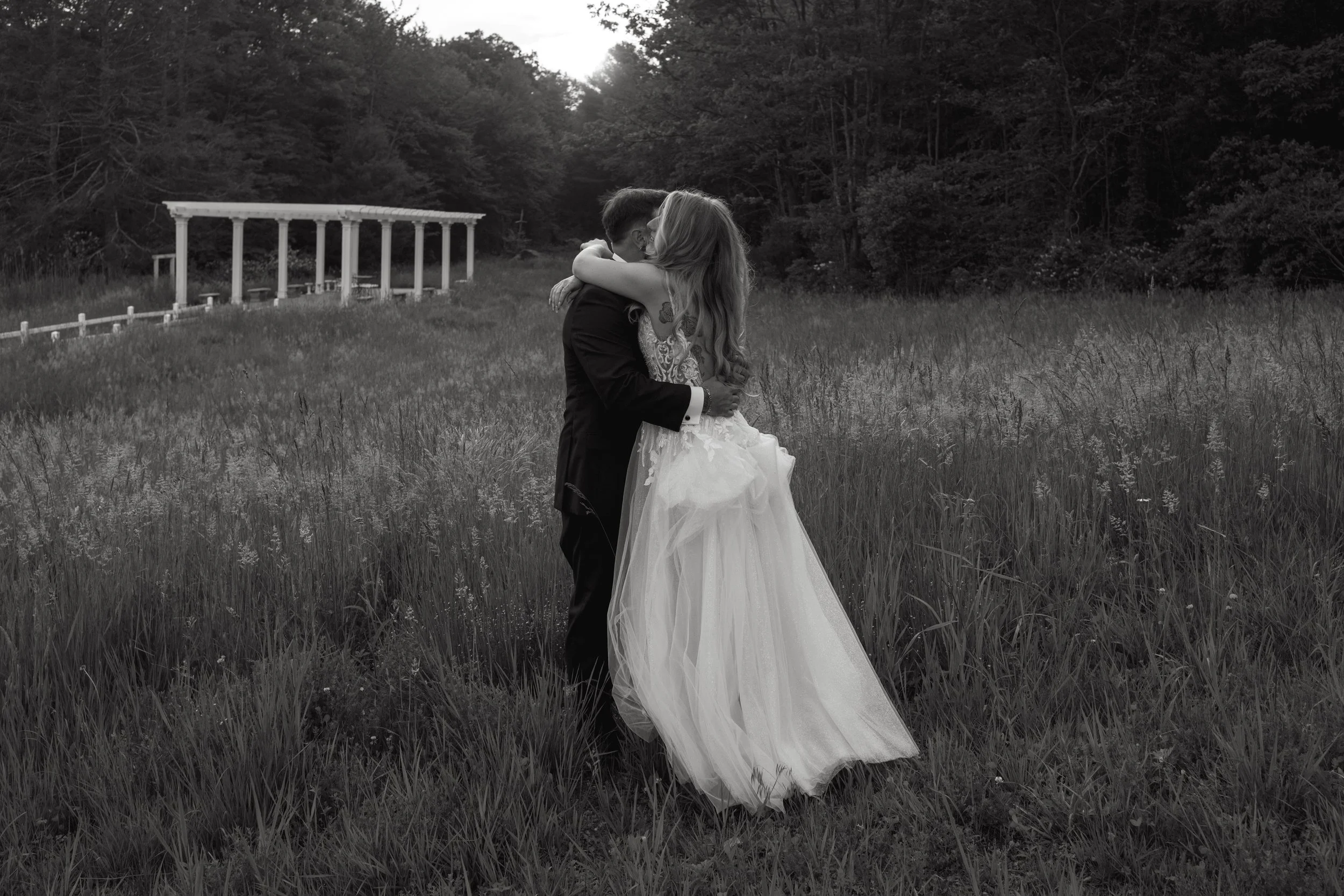
J + L on their wedding day at Five Bridge In, Rehoboth, MA—these two opted out of a first look, but instead had an extended couples session during cocktail hour
Benefits of a first look
A first look can:
Reduce pressure before the ceremony
Allow more portraits earlier in the day
Free up time for guests during cocktail hour
This is particularly helpful if you’re planning a shorter winter day or a tight venue schedule.
Waiting until the ceremony
If you prefer to see each other for the first time during the ceremony, your timeline will need to allow more time afterwards for portraits. This often means a longer cocktail hour or fewer formal photographs.
Neither option is better — it simply affects how the day flows.
Common Wedding Timeline Mistakes (And How to Avoid Them)
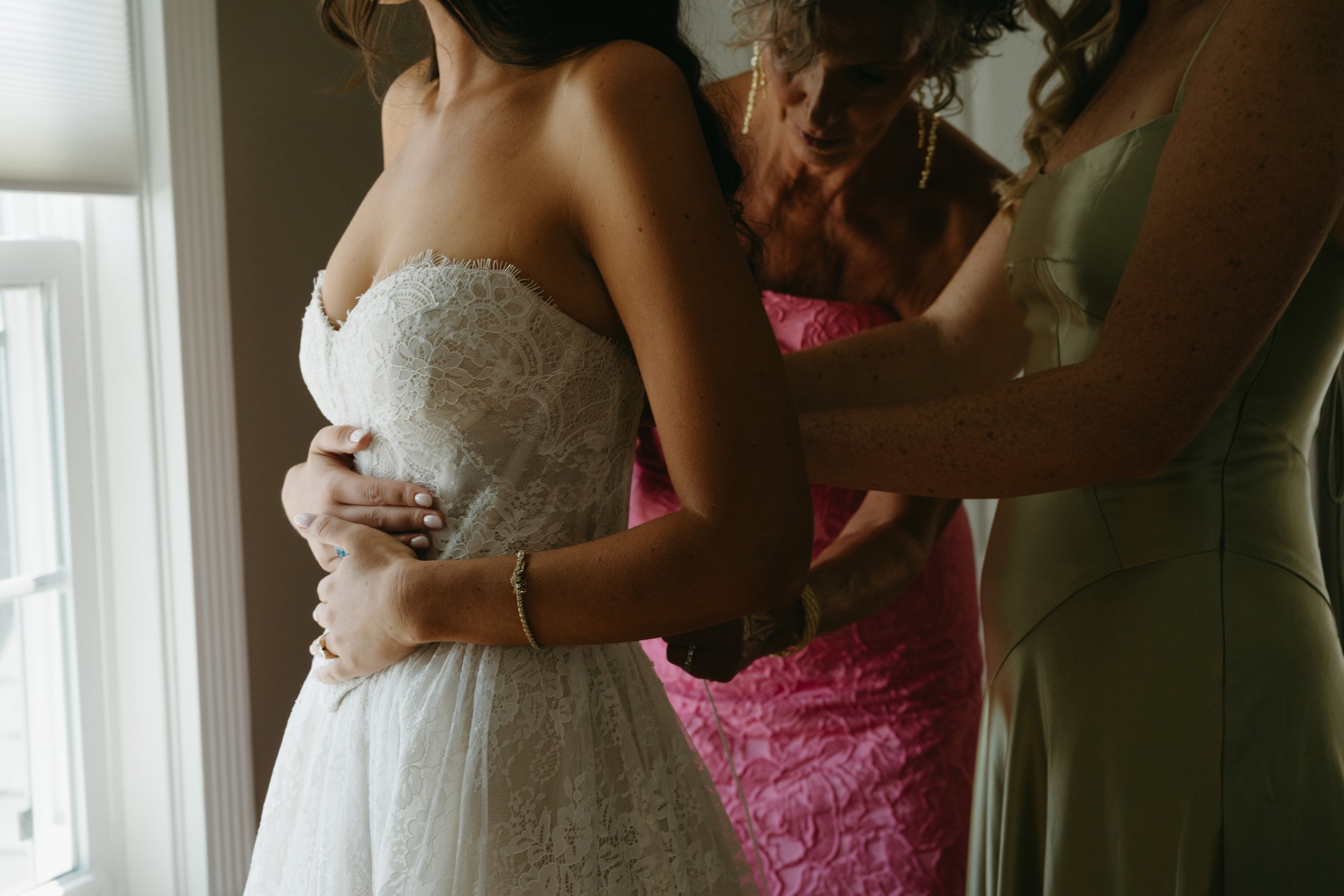
Many timeline issues are avoidable with a bit of foresight.
Underestimating how long things take
Almost everything takes longer on a wedding day. Build in buffer time wherever possible.
Overpacking the schedule
Trying to fit too many locations, activities, or formal events into one day leaves little room for enjoyment. Prioritise what truly matters.
Not sharing the timeline with suppliers
Every supplier should have access to the final timeline. This ensures everyone works from the same expectations and can flag issues early.
How to Create a Timeline That Feels Calm, Not Rigid
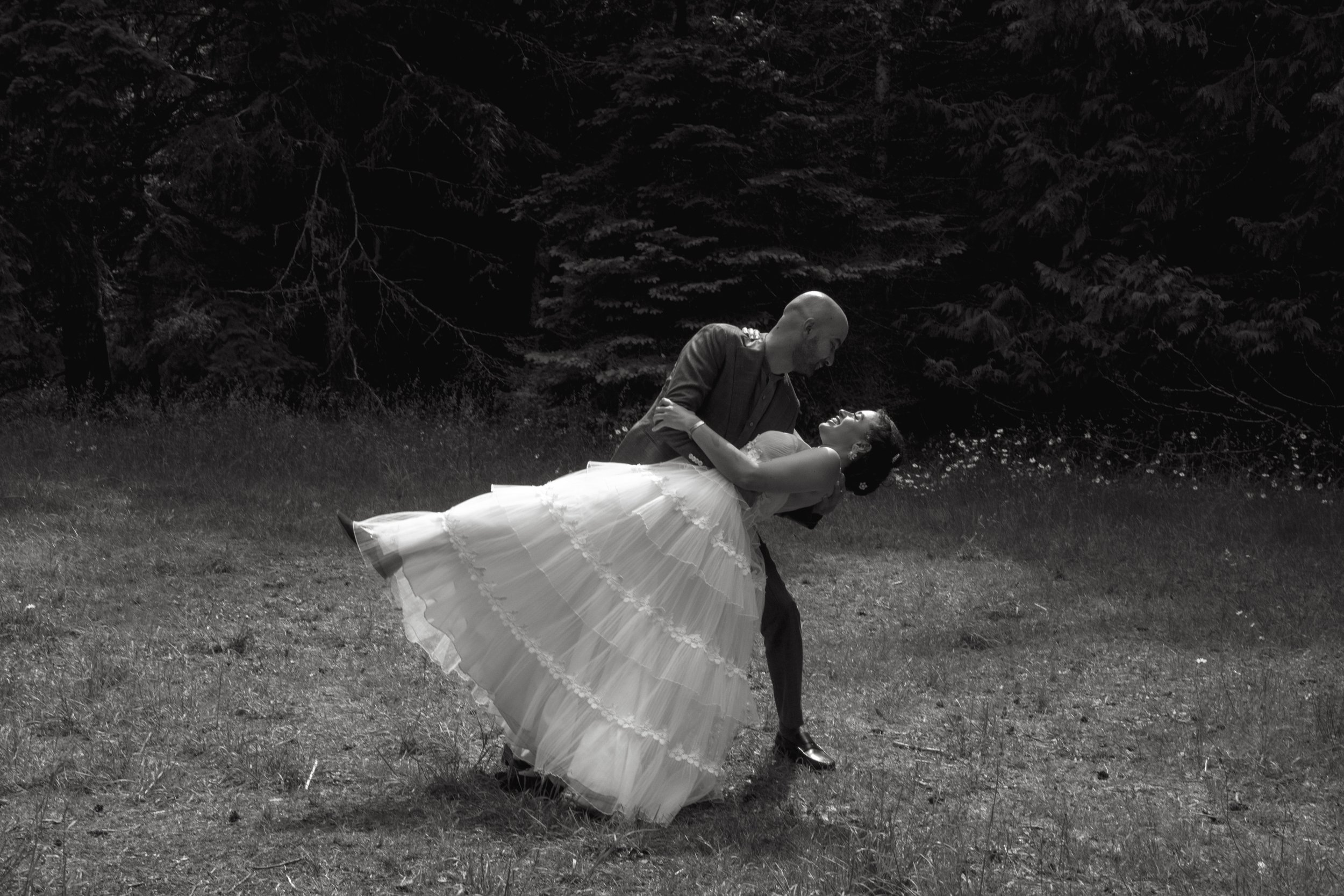
A good timeline supports the day without controlling it.
Build in breathing room
Aim for small pockets of unstructured time, especially after major moments like the ceremony.
Accept that small shifts will happen
A timeline should guide the day, not dictate it. Minor delays are normal and manageable when the overall structure is sound.
Trust experienced suppliers
Photographers, planners, and coordinators have seen hundreds of timelines. Their advice is rooted in experience, not preference.
Example Wedding Day Timeline (Flexible Template)
Here’s a general example for a wedding with a mid-afternoon ceremony:
09:30 – Hair and make-up begins
12:30 – Hair and make-up complete
13:00 – Getting dressed
14:30 – First look and portraits
15:30 – Family Formals
16:30 – Ceremony
17:00 – Cocktail Hour
18:00 – Dinner followed by cake cutting
19:30 – Speeches
20:30 – Dancing
This structure works well across many locations, including estate weddings in New England and countryside venues in Scotland, but should always be adapted to your specific plans.
Frequently Asked Questions About Wedding Day Timelines
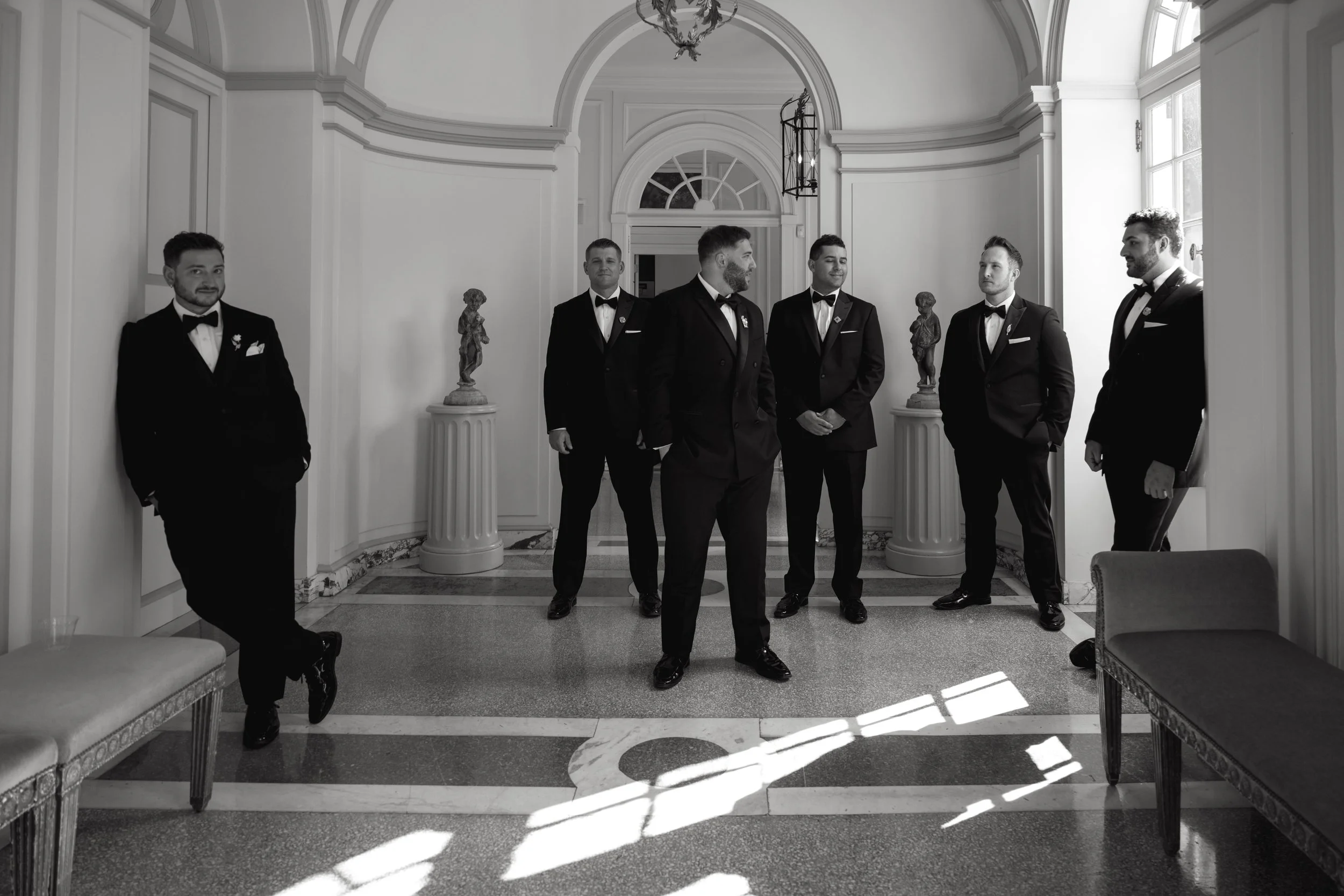
A with his groomsmen at The Mount, Lenox, MA
HOW FAR IN ADVANCE SHOULD THE FINAL TIMELINE BE SHARED?
Ideally, share the final timeline with suppliers 2–4 weeks before the wedding. This allows time for adjustments if needed.
WHO SHOULD CREATE THE WEDDING DAY TIMELINE?
Often, this is a collaborative effort between the couple, planner, and photographer. If you don’t have a planner, your photographer can often guide the structure. Personally, I build a photo timeline for every single one of my clients, regardless of whether or not they have a planner.
HOW MUCH BUFFER TIME SHOULD BE INCLUDED?
As a general rule, add more buffer time than you think you’ll need to every single aspect of the day! Double all your travel times, and add 15-30 minutes for the key moments throughout the day, especially leading up to the ceremony.
DO SMALLER WEDDINGS STILL NEED TIMELINES?
Absolutely. Even intimate weddings benefit from a clear structure, especially when photography, meals, and travel are involved.
CAN THE TIMELINE CHANGE ON THE DAY?
Yes — and it often will slightly. A good timeline is flexible enough to absorb small changes without causing stress (hence the buffer time).
Final Thoughts
Creating a wedding day timeline that actually works is about realism, clarity, and intention. When you allow enough time, communicate clearly with suppliers, and build in space to breathe, the day feels smoother for everyone involved.
A thoughtful timeline doesn’t make the day feel rigid — it creates the freedom to be present, enjoy the moments as they unfold, and trust that everything has room to happen naturally.
If you want to hear more, feel free to reach out to me here