
Best 8 Ways to Feel Comfortable in Front of the Camera on Your Wedding Day

Feeling uncomfortable in front of the camera is far more common than most couples admit. Even people who are confident in everyday life often feel a quiet tension when they know they’re being photographed — especially on a day that carries emotional weight.
This article is about practical, experience-based ways to feel more at ease on your wedding day, without pretending the camera isn’t there or forcing yourself into someone else’s version of confidence. These observations come from years of watching how couples settle — or don’t — into being photographed, and what consistently helps.
Comfort matters because it directly shapes how photographs feel. When you’re at ease, images tend to reflect connection rather than self-consciousness. And that’s what lasts.
Why do so many couples feel awkward in front of the camera?
Most couples aren’t used to being photographed for extended periods, especially in emotionally charged situations. The discomfort rarely comes from the camera itself, but from uncertainty: not knowing what’s expected, how you’re meant to look, or whether you’re “doing it right”.
The good news is that comfort isn’t a personality trait. It’s an environment. And that environment can be shaped.
1. Choose a photographer whose presence feels grounding, not performative
This is the single most influential factor.
Before any technical skill comes into play, ask yourself how you feel around the photographer. Not how much you like their images — but how you feel in conversation.
Couples who feel comfortable are almost always working with someone whose presence is calm, observant, and measured. You don’t need someone to entertain you or hype you up. You need someone who can read a room and adjust their energy accordingly.
If you feel more relaxed after speaking with them, that’s a good sign.
2. Let go of the idea that you need to “look natural”
Trying to look natural is often what creates tension.
Comfort tends to arrive when couples stop monitoring themselves and start responding to each other instead. This doesn’t require pretending the camera isn’t there — it requires trusting that you don’t need to manage it.
Some of the most settled photographs come from moments where couples allow themselves to be still, rather than trying to fill space with movement or expression.
3. Build breathing room into your timeline

Tight timelines create physical and emotional pressure, which shows in photographs.
I’ve consistently noticed that couples who feel most comfortable are those who have allowed space between events — particularly before the ceremony and during portraits.
Even ten extra minutes can make a difference. When there’s no rush, shoulders drop. Breathing slows. The body settles.
Comfort is rarely about confidence. It’s about not being hurried.
4. Spend time together before the ceremony if it feels right to you
There’s no rule that says you must see each other for the first time at the ceremony.
Many couples find that spending time together earlier in the day allows them to regulate their emotions and arrive at the ceremony feeling grounded rather than overwhelmed.
This doesn’t diminish the significance of the moment. In fact, it often deepens it — because you’re no longer holding everything in.
From a photographic perspective, this often results in more relaxed, connected images throughout the day.
5. Wear clothing that allows you to move and breathe
This may sound obvious, but it’s frequently underestimated.
If your clothing restricts movement, breathing, or posture, your body will register discomfort even if you’re mentally prepared.
Before the wedding, practise sitting, walking, and standing in what you’re wearing. Notice where tension builds.
Comfortable clothing doesn’t mean casual — it means considered. When your body feels supported, you’re less likely to fixate on how you look.
6. Understand what documentary photography actually requires from you
One of the reasons couples feel uneasy is because they assume they’re expected to perform.
Documentary photography doesn’t ask you to do anything other than participate in your day. There’s no need to maintain expressions, hold poses, or repeat moments.
When couples understand that they’re not responsible for creating photographs — only for being present — a noticeable shift happens.
You are not the subject of a production. You are part of a lived experience.
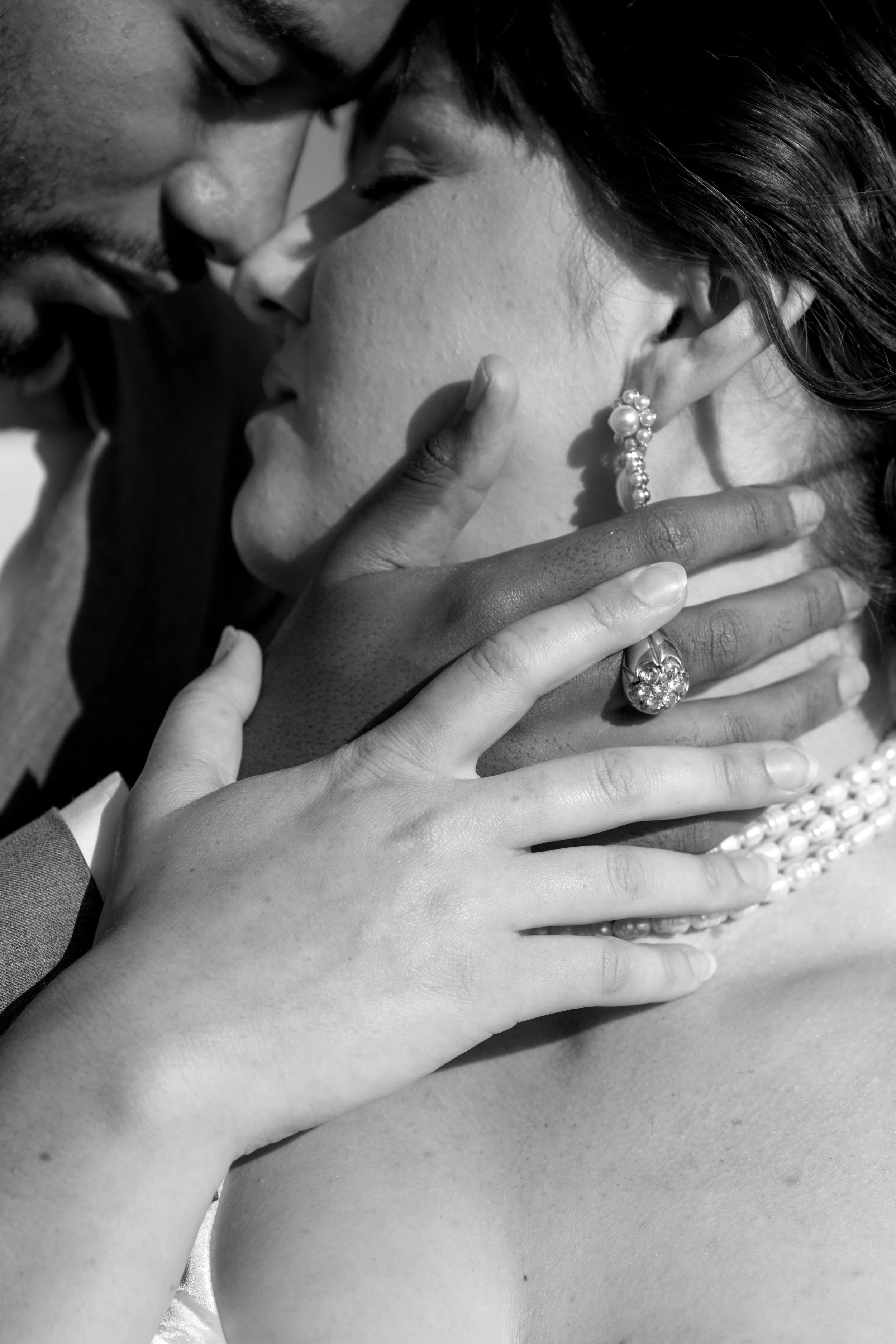
7. Focus on physical connection, not the camera
When couples don’t know what to do, they often default to looking at the camera.
A far more grounding approach is to focus on physical connection: holding hands, standing close, or simply sharing space.
Physical proximity regulates nerves. It anchors attention away from self-awareness and back into relationship.
This is especially helpful during portrait time, when stillness can feel exposing. Connection gives the body something familiar to return to.
8. Accept that some nerves are not only normal — they’re useful
The goal isn’t to eliminate nerves.
A small amount of nervous energy is often a sign that the moment matters. Trying to suppress it can create more tension than allowing it to exist.
Couples who feel most comfortable are usually those who stop resisting how they feel and let the day move through them.
Photographs don’t require you to be calm. They require you to be present.
What couples often misunderstand about comfort and photography

Comfort is not about knowing how to pose.
Comfort is not about being photogenic.
Comfort is not about performing confidence.
Comfort comes from:
Trust in the people around you
Space in the schedule
Permission to feel what you’re feeling
These conditions matter far more than technique.
How comfort changes throughout the day
Most couples start the day more aware of the camera than they end it.
As the day unfolds and attention shifts toward people and experience, the camera recedes into the background. This is why early moments can feel more tentative, while later images often feel more relaxed.
Knowing this ahead of time can be reassuring. You don’t need to feel comfortable immediately. You just need to allow yourself to arrive there gradually.
Frequently Asked Questions
What if we’re both camera shy?
This is very common. Working with a photographer who prioritises observation over direction makes a significant difference.
Do engagement sessions help with comfort?
For some couples, yes. They offer a low-pressure way to understand how it feels to be photographed together.
Will we be told how to pose?
In a documentary approach, direction is minimal. Guidance may be offered, but the focus remains on interaction rather than posing.
What if we feel awkward during portraits?
Awkwardness usually passes quickly when movement slows and attention returns to connection rather than performance.
Is it okay to tell our photographer we’re nervous?
Absolutely. Clear communication allows your photographer to adapt their approach and pacing.
A final thought
Feeling comfortable in front of the camera isn’t about changing who you are. It’s about creating conditions where you don’t feel the need to manage yourself.
When those conditions are in place, photographs tend to reflect ease, connection, and honesty — not because you tried to look a certain way, but because you were allowed to be present.
If you’d like to explore this further, or you want to chat through any pain points you might be facing as you search for your perfect wedding photographer, get in touch with me through my inquiry form so we can hop on a call and meet!